
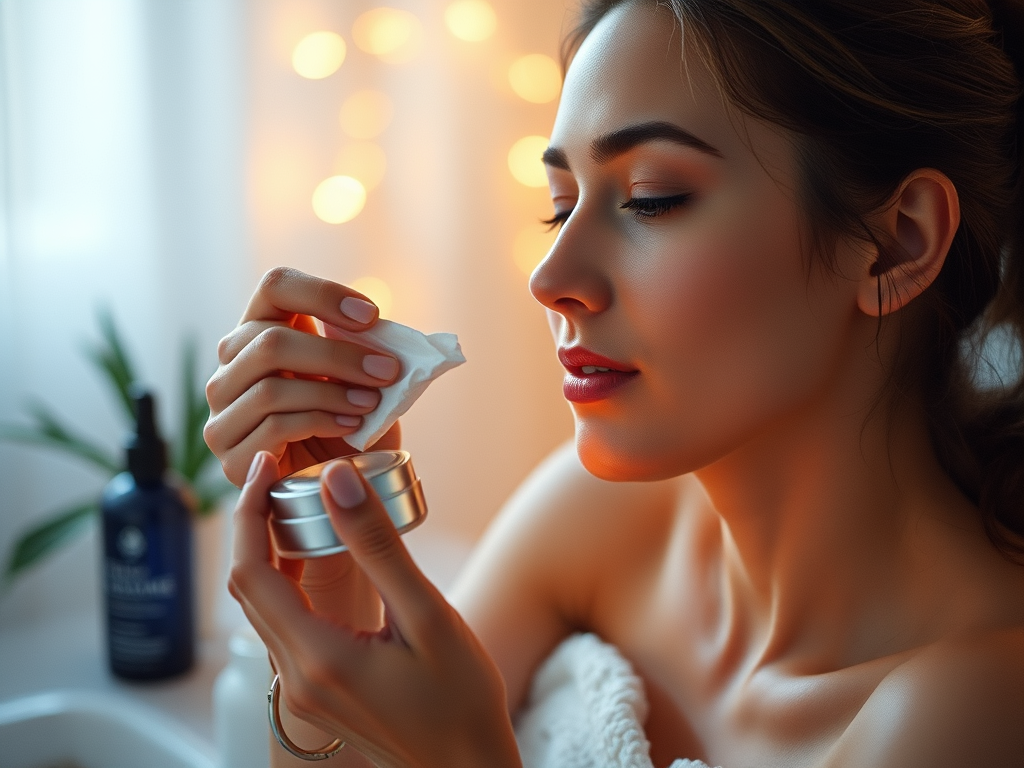
Nighttime Skincare Is Mostly a Body Problem
Search for a nighttime skincare routine and you get a face-shaped answer: cleanse, tone, treat, moisturize. That sequence is reasonable, and it is also where nearly every guide stops — at the jawline. Yet the skin that spends the most hours against fabric, dries out fastest in heated rooms and gets the least thought between October and March is the skin below the collarbone. A nighttime routine that ignores it is solving part of the problem and calling it the whole thing.
This guide is built the other way around. The face gets its steps, but the spine of the routine is the body: what you wash with, what goes on while skin is still damp, and what stays within reach of the pillow. Everything below uses products you can actually buy, at the prices listed, with no promises about what a jar can do to a decade of sun exposure.
What the Overnight Window Actually Is
There is a lot of fuzzy language around sleep and skin. You will read that skin “repairs itself” at night, that cell turnover doubles, that some hour is magic. The honest version is less cinematic: at night you are not in the sun, not wearing makeup, and not washing your hands every twenty minutes. That stretch of undisturbed hours is simply when whatever you applied gets to sit on the skin instead of being washed or rubbed away. The benefit comes from repeating the application, not from the clock on the wall.
So the goal of a nighttime routine is simpler than the genre suggests: remove the day’s residue without stripping the skin, leave a layer of something that holds moisture in place, and do it often enough that it becomes automatic. The rest is choosing products you do not mind using.
The Order That Matters, and the Order That Doesn’t
Wash, then stop washing
Cleansing at night is worth doing — makeup, sunscreen, sweat and city air do not need to spend eight hours on your face. A second round “to be sure” is not worth doing. Two passes with a strong cleanser is a common route to tight, itchy skin that then needs more product to feel normal again. One gentle wash, lukewarm water, pat dry. If your face feels squeaky afterward, the cleanser is too much for you.
Apply to damp skin, not dry skin
This is the most useful habit in the entire routine, and it costs nothing. Oils and butters spread further and feel less greasy on skin that is still slightly wet from the bath or shower. Towel off just enough that you are not dripping, then apply straight away. Wait too long and you are only pushing oil around a dry surface.
Seal, don’t stack
Five thin layers do roughly the same job as one adequate layer and take three times as long. A body oil followed by a cream on the rough patches — elbows, knees, heels — is a complete body routine. Extra steps mostly buy extra time in the bathroom.
The Bath Is Half the Routine
If you bathe at night, the bath is not a preamble to the routine; it is half of it. A capful of bath oil in warm — not hot — water does more for dry winter skin than a serum applied afterward to skin you have already stripped. Warm water, a long soak and a heavily scented product is also a reliable recipe for irritation if you are sensitive, so keep the soak short and the water moderate.
The practical advantage of bath oil is coverage: it goes everywhere the water goes, including the back and the backs of the arms, the two areas people most often miss with a lotion. The practical disadvantage is slip. Bath oil makes a tub genuinely slippery, so use a mat and rinse afterward. That is not a marketing caveat; it is a real one.
Hands and Lips: the Overnight Multipliers
Hands and lips are where a bedtime application shows up most clearly in the morning, because they are the two places that take the most punishment during the day and receive the least attention. Hands are washed dozens of times; lips are licked, chewed and exposed. A hand cream before bed and a balm on the nightstand is a two-minute addition with a disproportionate payoff.
A nighttime balm should be boring and occlusive rather than flavored and tempting — a balm you want to lick off is a balm that leaves. Something with vitamin E and aloe is a reasonable default; the job is to hold moisture in, not to taste like dessert. If you enjoy a scented balm, use it, but understand that the scent is for you and not for your skin.
Products That Fit This Routine
These are the items on this site that map cleanly onto the steps above. None of them is a treatment for a skin condition; they are bath and body products and should be judged on how they feel and how often you reach for them.
Bath oils and the tub step
Skin So Soft Original 3pc Gift Set ($31.49) covers the whole bath-to-bed sequence in one box: a 6.76 fl oz gelled body oil, a 5 fl oz bath oil spray, and a 500 mL bath oil, plus a gift bag. The spray is the piece that gets used most in a hurry — a few pumps on damp skin after a shower is faster than pouring from a bottle.
Skin So Soft Original Gift Set ($31.49) swaps the large bath oil for a 1.69 oz body oil stick, which is the better pick if your routine is shower-based rather than tub-based, or if you want something that travels without leaking.
Body butter, bubble bath and hand cream
Senses S’mores & Snuggles Gift Set ($24.99) is the richest option here: a 6 oz whipped body butter, a 24 fl oz bubble bath, and a 1.7 fl oz hand cream. This is the set for a full bath night rather than a quick shower, and the body butter is the piece that suits elbows, knees and heels.
Hands and lips together
Merry Snuggle Gift Set ($9.99) bundles two 1.7 fl oz hand creams — Skin So Soft Original and Soft & Sensual — with two 0.14 oz lip balms, Senses Vanilla Latte and Senses Hot Chocolate. At that price it is the cheapest way to test the whole hand-and-lip habit before committing to larger sizes.
If you would rather buy balms singly, Senses Vanilla Latte Lip Balm and Senses Hot Chocolate Lip Balm are $3.00 each at 0.14 oz, both formulated with vitamin E and aloe vera. One for the nightstand, one for the bag.
Skin So Soft Soft & Sensual Gift Set ($25.99) is the middle path: a 6.76 fl oz gelled body oil, a 3.4 fl oz Soft & Sensual hand cream, and a 1.7 oz body oil stick. The larger hand cream is the reason to choose it — 3.4 fl oz lasts through a winter of nightly use.
A Weeknight Version You’ll Repeat
The routine that survives a Tuesday is the one with the fewest decisions. A version that works:
- Bath or shower, lukewarm and short. One wash.
- Step out, towel off lightly, leave skin slightly damp.
- Bath oil or gelled body oil on damp skin, working from the legs up.
- Body butter or cream on elbows, knees and heels.
- Hand cream, then lip balm, then bed.
On tub nights the bubble bath goes in the water and the order stays identical afterward. The sequence takes under five minutes once it is memorized, and the products should live in the bathroom rather than a cabinet, because anything stored out of sight stops getting used around week two.
Where This Routine Stops
A few honest limits, since the genre tends to skip them.
- Fragrance is the most common reason a body product does not work out, and these sets are scented. If your skin has reacted to scented products before, patch test a small area first, and do not apply anything to broken or freshly shaved skin.
- Bath oil makes tubs and shower floors slippery. Use a mat, rinse the tub, and step out carefully.
- Nothing here changes skin structure overnight. Softer-feeling skin in the morning is a real but temporary result; it is not evidence of a long-term change.
- Persistent rashes, cracking, bleeding or itching are not a product problem. See a clinician rather than layering on something stronger.
- Oils are not right for everyone. If you are prone to body breakouts, a lighter cream on the back and chest may suit you better than oil everywhere.
The Morning After Is the Point
Nighttime skincare is not really about the night. It is about the morning: getting dressed without that tight feeling across the shins, washing your hands without needing cream immediately after, and not starting the day already behind on moisture. The routine that gets you there does not need eleven steps or a new product every month. It needs a bath or shower, something that holds moisture on damp skin, and a hand cream and balm close enough to the bed that you use them without thinking.