
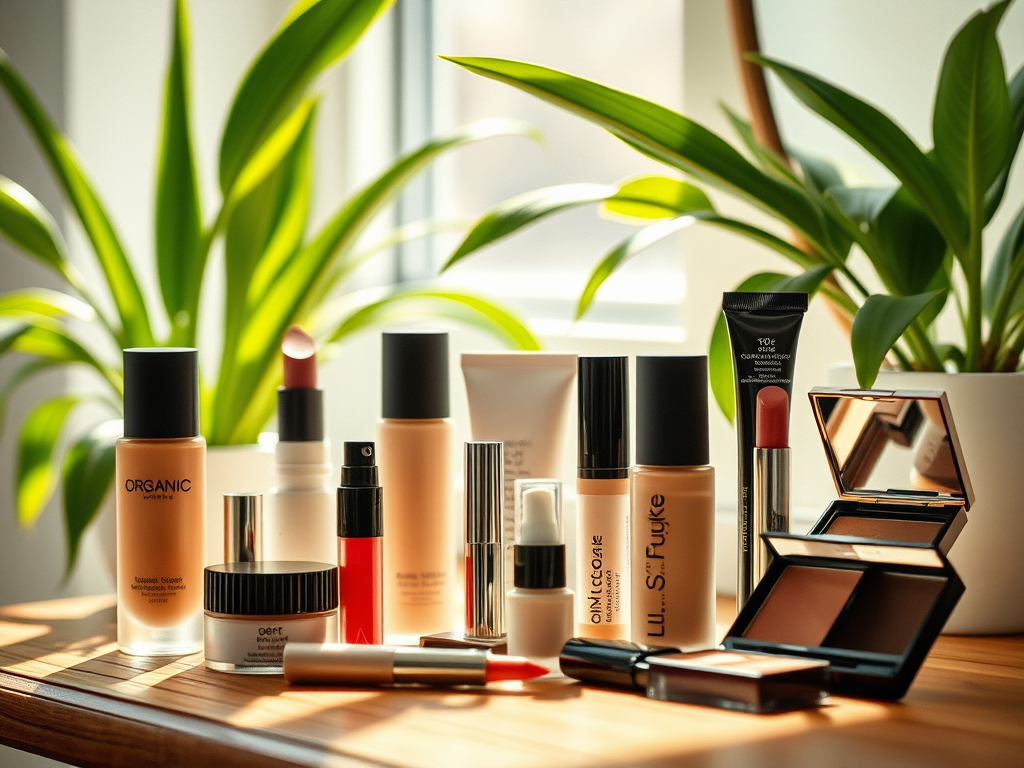
Organic Makeup, Without the Hype
Most articles about organic makeup start with a list of buzzwords. This one starts with a shopping problem: you are standing in a store aisle, or scrolling a product page, and the label says “natural” in a font that looks like a leaf. What does that actually tell you? Often, very little. So the useful version of the organic makeup conversation is not “organic is magic” but “how do I read a label, decide what matters to me, and build a routine I can actually keep?”
That practical angle is what this guide covers: where organic claims come from, what certifications really verify, which product categories are worth upgrading first, and how to keep the rest of your routine simple without pretending every bottle needs to be certified.
Where the Word “Organic” Comes From
In food, “organic” is a regulated farming term. In beauty, it is looser. A brand can call a formula organic because one ingredient was grown organically, while the rest of the bottle is conventional. That is not necessarily dishonest, but it is incomplete, and it is the main reason two products with identical front-of-pack wording can be very different inside.
What certification labels verify
Third-party standards exist precisely to remove that ambiguity. USDA Organic applies to agricultural ingredients and requires a high percentage of organic content for the product to carry the seal. COSMOS Organic is a European standard covering organic and natural cosmetics with thresholds for both. Ecocert is a certification body that audits ingredients, processing and packaging claims. The detail that matters: these programs audit the supply chain, not the marketing copy. A product without a seal can still be thoughtfully formulated, but you are relying on the brand’s disclosure rather than an outside check.
What “free from” usually means
Phrases like “free from synthetic dyes” or “no artificial fragrance” are self-declared. They can be accurate and useful, and they can also be technically true while hiding a substitute you would not have chosen. Read the ingredient list, not just the callouts.
Why People Switch, Honestly
The commonly cited reasons are straightforward: fewer synthetic dyes and heavy fragrances, simpler ingredient lists, and packaging or sourcing choices that aim at lower environmental impact. If your skin tends to react to heavily fragranced products, a shorter ingredient list is often easier to troubleshoot, because there are fewer variables to isolate.
The honest limitations are just as important. “Organic” is not a synonym for “hypoallergenic.” Botanical ingredients can irritate skin, and essential oils that smell wonderful in a bottle are a common trigger for sensitive people. Organic formulas also tend to have shorter shelf lives and can cost more. And no cosmetic product, organic or otherwise, is a treatment for a skin condition. If you have a persistent skin concern, that is a conversation with a dermatologist, not a product page.
A Sensible Order for Switching
You do not need to replace everything at once, and doing so is the fastest way to waste money. A workable sequence looks like this:
1. Start with what sits on your skin longest
Foundations, tinted moisturisers and body oils stay in contact with skin for hours. These are the categories where ingredient transparency earns its keep. If you are curious about organic-positioned formulas, this is where to spend the budget first.
2. Then the products you use every single day
Lip balm, hand cream and body lotion get reapplied constantly. Swapping a daily balm is low-risk and low-cost, which makes it a good test of whether a simpler formula suits you before you commit to a full-size foundation.
3. Leave the occasional products for last
A special-occasion product used four times a year does not need to be the first thing you research. Buy what you enjoy and spend your label-reading energy where the exposure is highest.
Everyday Swaps Worth Considering
If you want to test the “fewer, simpler, better-chosen” approach without rebuilding your whole routine, single-purpose products are the easiest entry point. Lip balms are a good example because the formula is short and the use is frequent.
The Senses Hot Chocolate Lip Balm and the Senses Vanilla Latte Lip Balm are both formulated with vitamin E and aloe vera, and each comes in at $3.00 for a 0.14 oz. stick. If fragrance is the thing you are trying to reduce, the Avon Calendar Lip Balm is formulated without fragrance, $3.00 for 0.16 oz. net wt.
Body care is the next tier. Gift sets are an underrated way to sample a line before buying full sizes, because you get several formats in one box. The Skin So Soft Original Gift Set at $31.49 bundles the Original Gelled Body Oil (6.76 fl. oz.), the Original Bath Oil Spray (5 fl. oz.) and the Original Body Oil Stick (1.7 oz. net wt.). If you prefer a creamier, softer finish, the Skin So Soft Soft & Sensual Gift Set at $25.99 pairs the Original Gelled Body Oil with a 3.4 fl. oz. Soft and Sensual Hand Cream and a Soft & Sensual Body Oil Stick. For a smaller, lower-commitment entry point there is the Merry Snuggle Gift Set at $9.99, which includes two hand creams and two lip balms.
Scented bath and body routines have their own audience, and the Senses S’mores & Snuggles Gift Set at $24.99 collects a whipped body butter (6 oz. net wt.), a bubble bath (24 fl. oz.) and a hand cream (1.7 fl. oz.) in one bundle. Bundles like these are useful precisely because they let you try a texture across three formats instead of guessing from a single jar.
One more category belongs in any outdoor routine, even though it is not makeup: the Skin So Soft Bug Guard Plus Picaridin Pump Spray at $14.00 is a 4 fl. oz. pump spray described as repellency against mosquitoes, deer ticks, gnats, no-seeums, sand flies and biting midges, with picaridin as a DEET alternative and a low-odor, light feel. It is formulated for repellency, not for treating anything, and it is a sensible reminder that a thoughtful routine covers the whole day, not just the mirror.
Reading a Label in Four Questions
When you are comparing two products, four questions do most of the work:
What is the first ingredient? In most cosmetics it is water or an oil. If it is something you do not recognise and cannot look up quickly, that is a signal to keep reading rather than an automatic no.
Does it carry a seal? A certification mark from a body like USDA, COSMOS or Ecocert means an outside audit happened. Absence of a seal is not proof of a bad formula, only proof that the claim is self-declared.
What is it scented with? “Fragrance” is a catch-all. If you react to scent, look for a product explicitly formulated without fragrance, such as the Calendar Lip Balm above.
How long will it take you to use it? Cleaner formulas with fewer preservatives have shorter shelf lives. Buying a large size you will not finish is not a sustainable choice, whatever the label says.
The Balanced Conclusion
Organic makeup is worth understanding, but it is not a single decision you make once. It works best as a set of habits: read the back of the pack, prefer outside certifications when they exist, spend your budget on the products you wear longest, and accept that “natural” and “better for you” are not the same sentence. Start with a lip balm or a small gift set, notice how your skin responds, and expand from there. That is a switch you can live with, rather than one you abandon in a drawer.