
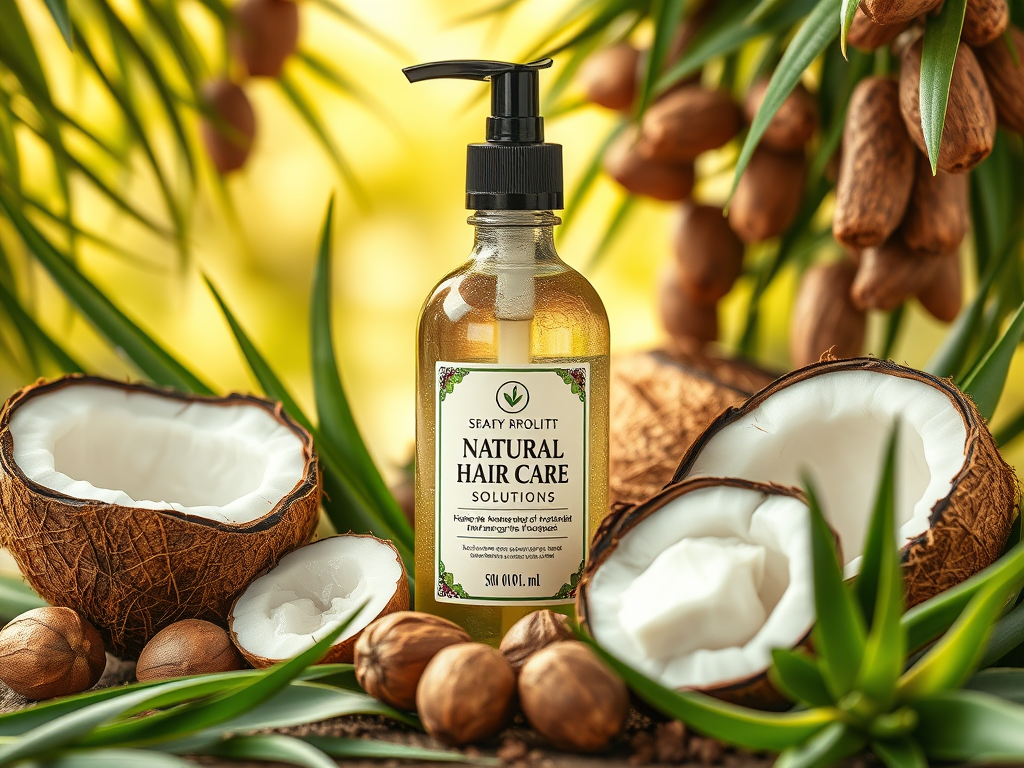
Dull hair is usually a routine problem before it is a product problem
Most people lump three separate things together when they say their hair looks tired: how it feels (dryness, roughness, tangling), how the scalp feels (tightness, flaking, itch), and how it looks (shine, body, colour). Those respond to different habits, and buying a new bottle rarely fixes all three at once. Washing less aggressively, dropping the hottest setting on your dryer, and resisting the urge to layer five products usually changes more than switching brands.
One boundary up front: if you are losing hair, or you have persistent flaking, itching, sore patches or sudden thinning, that is a conversation with a doctor or dermatologist, not a shopping decision. Nothing on this page is a treatment for a medical condition, and no product here is a substitute for a diagnosis.
What the word natural can and cannot promise
Natural is a marketing word, not a regulated guarantee. Plant-derived ingredients are not automatically gentler, and some of the most irritating ingredients in hair care are botanical fragrances, essential oils and extracts. Conversely, a well-formulated synthetic ingredient can be perfectly mild. The useful move is not to scan for a badge but to read the ingredient list, notice where fragrance appears, and patch-test anything new on a small area of skin before committing your whole scalp to it.
It also helps to be realistic about timelines. Hair is dead fibre once it leaves the follicle, so a product can smooth, coat and condition it, but it cannot repair a split end. New growth happens at the root over months. Any routine worth keeping is one you can repeat for eight to twelve weeks without resenting it.
Build the routine in layers
1. Wash less aggressively
Wet hair is fragile hair. Rough towel-drying and brushing while soaking wet cause more visible breakage than most people realise. Detangle with fingers or a wide-tooth comb from the ends upward, and let hair dry partway before styling.
2. Condition the ends, not the scalp
Conditioner is designed for the older, drier length of the hair. Applying it at the roots adds weight and can leave the scalp feeling coated. Rinse with cool or lukewarm water, which also helps close the cuticle and flatten the surface so light reflects more evenly.
3. Protect before heat and sun
A heat protectant is cheap insurance if you blow-dry or straighten regularly. Outdoors, the exposed part line and thinning edges are easy places to burn, and that is also where biting insects find skin. If you are hiking or gardening, Skin So Soft Bug Guard Plus Picaridin Pump Spray is listed at $14.00 as an insect repellent formulated with picaridin rather than DEET, described as strong against mosquitoes, deer ticks, gnats, no-seeums, sand flies and biting midges, with a low odour and a light, clean feel. Apply it as a repellent, not as a hair treatment.
4. Give it time
Pick one change, run it for a month, then judge. Changing five variables at once tells you nothing about which one worked.
Where this storefront actually stands
Honest limitation: tri-valley.us currently lists bath and body products, not dedicated shampoos, conditioners, masks or hair serums. If you came here ready to add a shampoo to your cart today, that item is not in this catalogue, and no amount of clever wording changes that. What is here is a small set of body-care bundles that fit the same low-effort, fragrance-forward self-care slot. Use them for what their labels say they are:
- Skin So Soft Original Gift Set at $31.49, bundling a 6.76 fl oz gelled body oil, a 5 fl oz bath oil spray and a 1.7 oz body oil stick, plus a blue snowflake gift bag.
- Skin So Soft Soft & Sensual Gift Set at $25.99, with a gelled body oil, a 3.4 fl oz hand cream, a body oil stick and a snowflake gift bag.
- Merry Snuggle Gift Set at $9.99, pairing two 1.7 fl oz hand creams with two 0.14 oz lip balms.
- Senses Hot Chocolate Lip Balm and Senses Vanilla Latte Lip Balm, $3.00 each, formulated with vitamin E and aloe vera and listed as moisturising.
None of these are hair products, and it would be dishonest to pretend a hand cream doubles as a leave-in conditioner. Body oils and balms belong on skin. What they can do is make the surrounding routine pleasant enough that you keep it up, which matters more than most people admit.
What to check before buying hair care here or anywhere
When a catalogue does stock hair products, four questions cut through the noise. Is it labelled for scalp or for hair length? Where does fragrance sit on the ingredient list? What is the size and the price per ounce? And does the brand publish full ingredients rather than a highlight reel? If the answers are thin, the product is probably thin too.
A two-week reset you can actually finish
Wash every second or third day with lukewarm water, condition only the mid-lengths and ends, air-dry when you can, and skip heat styling on at least half those days. Sleep on a smooth pillowcase if your hair is fine or prone to tangling. Keep a simple note of how your scalp feels on day one and day fourteen. That is the whole plan, and it costs nothing.
The honest bottom line
Reviving dull hair is mostly subtraction: less heat, less friction, fewer harsh washes and fewer competing products. Gentler ingredients can help, but they are not magic, and natural is not a promise. If you need hair-specific formulas, you will have to source them elsewhere for now. If you want body care that makes the rest of the week feel considered, the bundles above are what this storefront actually sells, at the prices listed.