
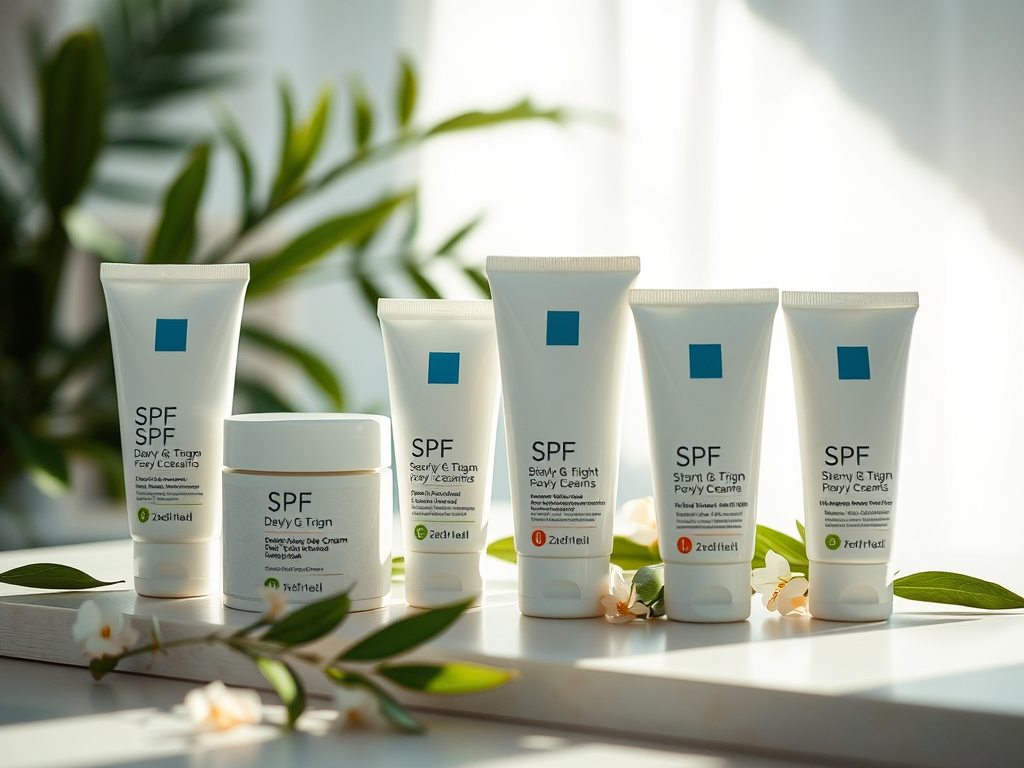
Start With the Finish, Not the SPF Number
Most SPF day cream guides begin with a number. A better starting point is texture, because the cream you actually finish is worth more than the one with the highest figure on the label. A day cream with sun protection has to do two jobs at once: it has to feel tolerable on bare skin at 7am, and it has to behave itself under whatever you apply next. If it pills, separates or leaves a pale cast, you will quietly stop reaching for it, and consistency is the part that matters.
So before comparing formulas, decide where the cream sits in your morning. Is it your only moisturiser, or a final layer over a serum? Will makeup go on top, or will you leave skin bare? The answers narrow the field faster than any label claim.
Match Texture to Your Skin Type
Oily and combination skin
Look for lightweight lotions, fluids or gels described as non-comedogenic and oil-free. Heavier creams tend to slide during the day, and they can make an already shiny T-zone worse. A fluid that sinks in quickly usually layers better under foundation and powder.
Dry skin
Dry skin often does better with a cream that includes emollients and humectants. If your day cream is your only moisturiser, check that hydration comes first on the ingredient list rather than sun protection alone. Applying it to slightly damp skin can help it spread further without using more product than you need.
Sensitive skin
Fragrance and high alcohol content are common culprits for stinging. Mineral filters such as zinc oxide and titanium dioxide are often suggested for reactive skin, though no filter suits everyone. Patch test on your inner forearm for a few days before committing to a full face.
Combination skin
Many people end up with two products: a lighter fluid for the centre of the face and a richer cream on cheeks and jaw. It is more effort, but it avoids the all-or-nothing compromise.
How SPF Fits Into a Morning Routine
The usual order is cleanse, any treatment serums, moisturiser or SPF day cream, then makeup. Sun protection should be the last skincare step so nothing sits between it and your skin. If your day cream already contains SPF, you generally do not need a separate sunscreen on top, provided you apply enough.
Quantity is where most routines quietly fail. A thin smear across the face is well below the amount used in testing, so the real-world protection is lower than the label suggests. Two finger-lengths of product is a common rough guide for face and neck. Reapplying during a long day outdoors is ideal; over makeup it is awkward, which is why many people keep a stick or powder formula for top-ups.
Building the Rest of the Look Around Sun Protection
Once the base is sorted, the rest of the routine is about products that sit comfortably on top. A few bundled sets make that step easier because the shades and finishes are already coordinated.
Base and glow
The Bronze & Glow Set ($26.99) pairs a gripping primer, a liquid blush and a bronzing powder, which is a sensible order to follow: prime, add colour, then warm the perimeter of the face. If you prefer a sculpted look, the Bronze, Lip & Eyeshadow Set ($23.99) includes a sculpting powder, a lip oil and an eyeshadow stick.
Eyes
The Beauty Basics Eye Set ($20.99) covers mascara, an eyeshadow stick and a blending brush. For more variety, the Glimmer Eyes Set ($24.99) adds a quad, a gripping primer and a precision brush, and the Glimmer Satin and Shimmer Set ($20.99) and Glimmer Matte and Shimmer Set ($20.99) each combine a lipstick, a liquid eyeshadow and a cheek colour.
Scent and finishing touches
If you like to finish with fragrance, the Bestie Duo Set ($29.99) and the Scent & Style Edit Set ($29.99) both bundle an eau de parfum with a puffer bag. Fragrance belongs last, and away from the face if your skin is reactive.
An Honest Note on What Is Not in the Catalogue
The products currently listed on this storefront are makeup and fashion sets. There is no dedicated SPF day cream among them, and no sun-protection figures are published for any of the items above, so none of them should be treated as a substitute for sunscreen. That is a real limitation, not a small print detail. If sun protection is your priority, buy the SPF day cream from a retailer that specialises in it, patch test it, and then use the sets here for the colour and finishing steps. Anyone claiming a primer or powder replaces proper sun protection is overselling.
Common Mistakes Worth Avoiding
The first is relying on the SPF in makeup alone; the amounts applied are typically far too small to reach the stated figure. The second is skipping the hairline, ears, neck and the backs of the hands, which are among the first places to show cumulative sun exposure. The third is using last summer’s bottle that has separated or changed smell; shelf life matters. The fourth is buying a large tube of something you dislike the feel of, which almost guarantees it stays in the drawer.
A Short Buying Checklist
Before you commit, ask: does it suit my skin type, does it layer without pilling, can I apply enough of it without it feeling heavy, is the packaging practical for reapplying, and does the price match how often I will realistically repurchase? If the answer to the first four is yes, the exact SPF figure matters less than you might think.
The Takeaway
Choosing an SPF day cream is mostly a question of fit rather than specification. Find a texture you will wear daily, apply it generously as the last skincare step, and treat the rest of your makeup routine as what sits on top. The bundles linked above can handle that second part; the sun protection itself you should source honestly from a dedicated product, since this storefront does not currently sell one.