
The One-Food Myth
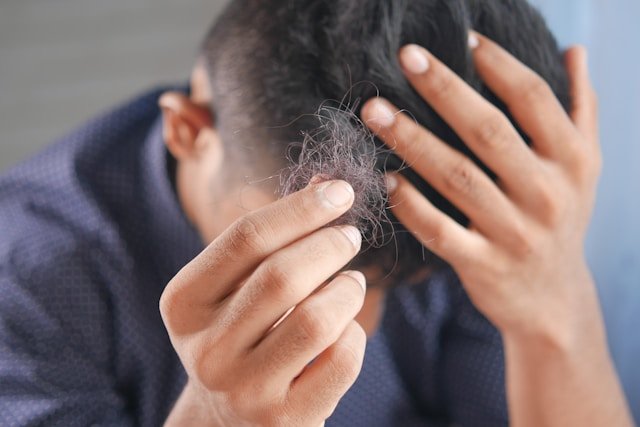
Search for foods that cause hair loss and you will find confident lists: sugar, dairy, fried food, gluten, and whatever else is trending. The honest answer is less tidy. Hair shedding is usually the visible end of something broader, and diet is one input among several. Genetics, hormones, thyroid function, medication, illness, and stress all sit in the same picture. No single food reliably causes hair loss on its own, and no single food reliably stops it.
What diet can do is create the conditions in which follicles struggle. This page focuses on that narrower, more defensible question: how eating patterns, not individual villains, may relate to shedding.
Why Hair Reacts Late to Diet
Hair is not a priority tissue. When the body is short on energy or key nutrients, it directs resources toward organs that keep you alive. The hair follicle, being optional in that hierarchy, is among the first things to be quietly downgraded.
This is why diet-related shedding is often delayed. A stretch of undereating in one month can show up as increased shedding two to three months later. That gap is why people blame the shampoo, the season, or a food they ate the week their hair started falling out. The timeline rarely matches the assumption.
Restriction matters more than any ingredient
The pattern most consistently associated with temporary shedding is not a specific food but a caloric or protein deficit. Crash diets, very low-calorie plans, prolonged fasting without planning, and rapid weight loss all reduce the raw material available for hair growth.
If you are eating far less than your body needs, the fix is rarely to cut another food group. It is to eat enough, consistently, with adequate protein spread across the day.
Deficiencies Worth Checking, Not Guessing
Iron and ferritin
Iron carries oxygen in the blood, and follicles depend on that delivery. Low iron is one of the more commonly discussed contributors to thinning and shedding, particularly where menstrual loss, pregnancy, or a plant-based diet with low absorption is part of the picture.
The trap is self-diagnosing. Iron is not a nutrient to supplement casually, because excess iron is harmful. If you suspect low iron, the reasonable path is a blood test and a clinician’s interpretation, not a bottle from a checkout aisle.
Biotin and the supplement hype
Biotin, or vitamin B7, appears in almost every hair supplement. In true biotin deficiency, hair can become brittle and weak. But genuine deficiency is uncommon in people eating a varied diet, and taking large doses when you are not deficient has not been shown to restore hair you were not losing for that reason.
Food sources such as eggs, nuts, and whole grains cover typical needs. More is not better here; it is mostly expensive urine.
Protein and overall energy
Hair is largely protein. Long stretches of low intake, whether from a poorly planned vegan diet, an aggressive cut, or simply skipping meals during a busy season, reduce the building blocks available. This is less a deficiency you test for and more a pattern you notice in your own eating.
Do Ultra-Processed Foods Directly Cause Shedding?
It is tempting to blame processed food outright. A more accurate framing is displacement. Diets heavy in ultra-processed food tend to crowd out the protein, iron, zinc, and varied micronutrients that follicles rely on. The problem is the gap left behind, not a single additive acting on your scalp.
High-sugar eating patterns are often mentioned for the same reason, usually as part of a broader metabolic conversation rather than a direct line to hair loss. If your diet is mostly packaged food, the useful change is adding real food alongside it, not declaring war on one ingredient.
Alcohol and appetite displacement
Heavy alcohol intake can displace meals and impair nutrient absorption. That is a general health issue first and a hair issue second. Framing it as a hair-loss cause overstates the direct link.
What Actually Helps
- Eat enough, consistently, before optimizing anything else.
- Get protein at each meal rather than concentrating it at dinner.
- Include iron-rich foods with a source of vitamin C to support absorption.
- Treat any suspected deficiency with a blood test, not a hunch.
- Be patient. Hair cycles work in months, not days.
If shedding is sudden, patchy, or accompanied by fatigue, changes in weight, or scalp symptoms, that is a medical conversation. Diet articles, including this one, are not a diagnosis.
Where a Storefront Fits, and Where It Does Not
It is worth being direct: the makeup and accessories on a beauty shelf do not affect hair growth. Nothing here treats, prevents, or reverses shedding, and any product promising that should raise suspicion.
What these items can do is support the part of the experience that is genuinely within your control, which is how you feel while you wait out a shedding phase. A Glimmer Eyes Set ($24.99) shifts attention to features you can style. A Bronze, Lip & Eyeshadow Set ($23.99) is a compact option for pulling a look together quickly. A Scent & Style Edit Set ($29.99) pairs a fragrance with a quilted puffer bag if you want the finishing touches handled in one purchase. The Bestie Duo Set ($29.99) bundles a perfume with a nylon puffer bag for a similar reason.
None of that grows hair. It simply keeps the focus on presentation and confidence while the slower nutritional work, and any clinical care, does its job.
The Bottom Line
Foods that cause hair loss, in the strict sense, are mostly foods you are not eating enough of, or a total intake too low to support a non-essential tissue. Crash dieting, protein gaps, and untreated deficiencies are the patterns worth attention. Individual ingredients get blamed far more often than the evidence supports.
Fix the foundation first. Test before supplementing. Give it months, not weeks. And when shedding is severe or unexplained, hand the question to a professional rather than a search engine.